Algorithmic Redlining: How AI Replicates Bias Against Black, Caribbean, African, and Latino New Yorkers in Housing and HiringRedlining algorítmico: cómo la inteligencia artificial reproduce el sesgo contra los neoyorquinos negros, caribeños, africanos y latinos en la vivienda y el empleo
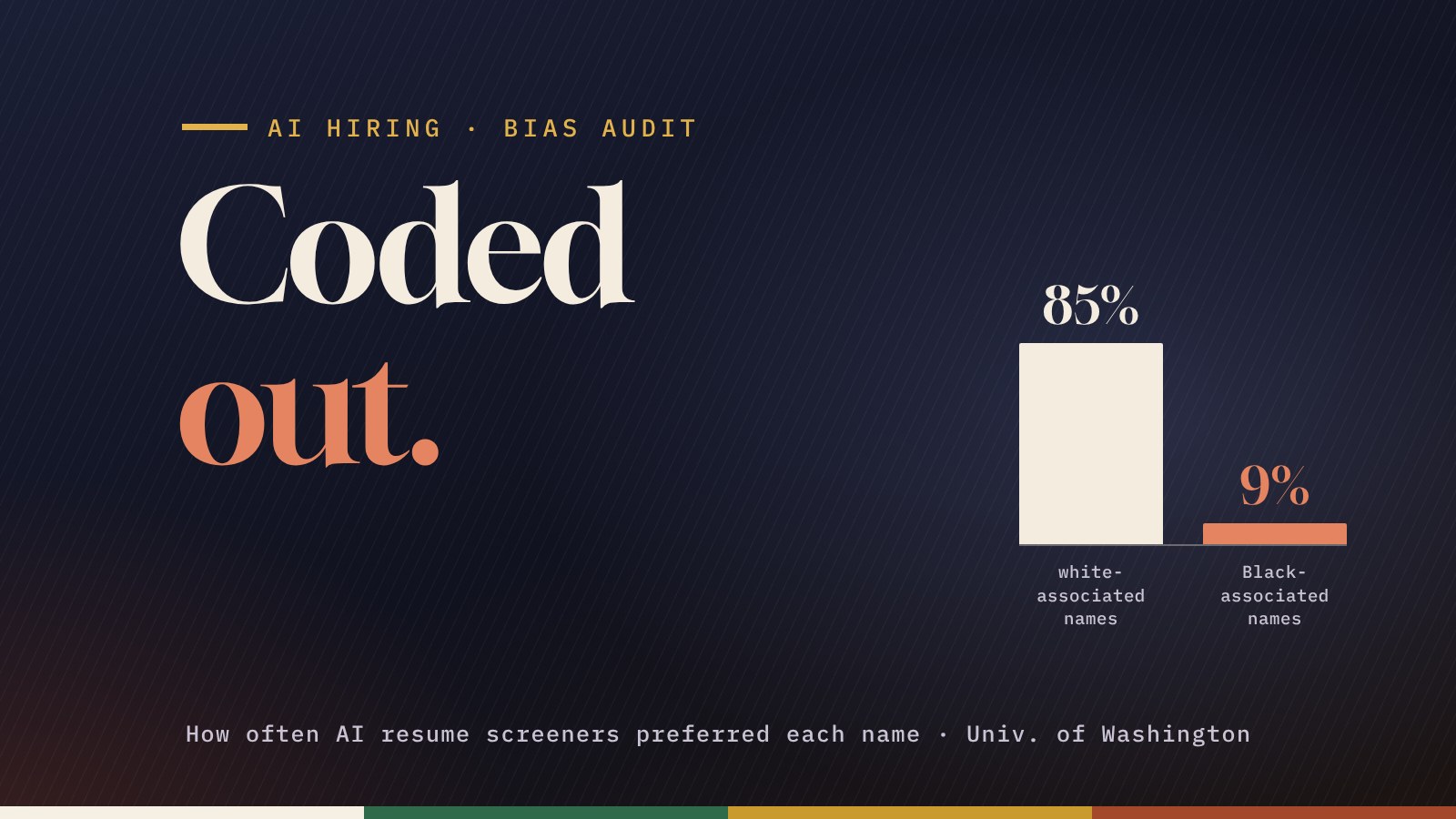
Tenant screeners, mortgage pricing tools and AI resume filters are trained on decades of biased records. In one audit, AI models preferred white-associated names 85% of the time and Black-associated names just 9%.Los sistemas de evaluación de inquilinos, las herramientas de precios hipotecarios y los filtros de currículos con IA se entrenan con décadas de registros sesgados. En una auditoría, los modelos de IA prefirieron nombres asociados a personas blancas el 85 % de las veces y nombres asociados a personas negras solo el 9 %.
 ByPor Dr. Richard Nuñez-Lawrence, Founding Executive Director, ALAPADirector ejecutivo fundador de ALAPA6 min readmin de lectura
When a Black couple touring an apartment in New York City recently overheard a real estate broker express frustration about selling to Black buyers, the moment captured the raw, familiar face of interpersonal housing discrimination. Yet across New York City and the nation today, the most widespread discrimination rarely happens within earshot of a microphone or an open door. Instead, it is coded silently into artificial intelligence (AI) and automated screening algorithms used by landlords, mortgage lenders, corporate recruiters, and municipal agencies.
Far from eliminating human prejudice, machine-learning systems are trained on decades of historically segregated housing records, biased hiring decisions, and narrow linguistic datasets. As a result, AI tools replicate—and rapidly scale—human bias against African Americans, African and Caribbean immigrants, Latinos, and Afro-Latinos, who sit directly at the intersection of anti-Black and anti-Latino algorithmic penalties.
1. Housing & Lending: Digital Gatekeeping and Algorithmic Redlining
When landlords and lenders outsource tenant screening and mortgage underwriting to automated software, historical inequities built into credit scores, eviction filings, and neighborhood ZIP codes become automated rejection notices:
- Biased Tenant Screening Algorithms: In the landmark Fair Housing Act lawsuit Louis v. SafeRent Solutions—backed by the U.S. Department of Justice and resolved in a $2.28 million settlement detailed by Cohen Milstein and the National Consumer Law Center—researchers and legal advocates demonstrated that AI tenant-scoring algorithms assigned systematically lower scores to Black and Hispanic rental applicants. Even when applicants held federally funded housing vouchers that guaranteed rent payment to the landlord, the software penalized them based on non-tenancy debts and flawed credit proxies.
- Algorithmic Mortgage Overcharges: According to research compiled by the Greenlining Institute and the University of Chicago’s Kreisman Initiative for Housing Law & Policy, automated mortgage pricing algorithms charge Black and Latinx borrowers significantly higher interest rates and fees than equally creditworthy white borrowers—costing Black and Brown families an estimated $765 million annually in excess mortgage charges.
- Public Housing and Homeless Resource Allocation: The Kreisman Initiative also highlighted how algorithmic vulnerability scoring tools used to allocate permanent supportive housing in major cities systematically assigned lower priority scores to Black and Latinx unhoused residents, masking racial disparities behind seemingly neutral risk questionnaires.
2. Hiring & Employment: Resume Screening and “Algorithmic Monoculture”
In the job market, automated resume screeners and AI video-interview platforms routinely filter out Black, African, Caribbean, and Hispanic candidates before a human recruiter ever sees their qualifications:
- Overwhelming Preference for White-Associated Names: In a landmark audit published by the University of Washington, researchers tested state-of-the-art large language models across more than 500 real-world job listings using identical resumes differentiated only by names associated with race and gender. The AI models favored white-associated names 85% of the time compared to just 9% for Black-associated names—and never preferred Black male-associated names over white male-associated names.
- Systemic Rejection Across Employers: A June 2026 study from Stanford University analyzing more than 4 million job applications screened by game-based AI hiring software found that 26% of Black applicants experienced biased job-level recommendations falling below the federal government’s 80% four-fifths disparate-impact threshold. Because multiple employers rely on the same underlying AI vendors—a phenomenon researchers call “algorithmic monoculture”—Black applicants faced correlated, universal rejections across every company using that software, resulting in tens of thousands of lost job selections.
- Human Recruiter Amplification: A follow-up study from the University of Washington found that when human hiring managers used biased AI recommendations, they adopted the software’s racial preferences 90% to 100% of the time—proving that biased algorithms actively train human gatekeepers to discriminate.
3. What Triggers the Bias? Linguistic, Diaspora, and Data Traps
Why do AI systems consistently penalize African Americans, Afro-Latinos, and immigrants from Africa and the Caribbean? Technical audits point to four core triggers inside the models:
- Dialect and Accent Penalties (AAVE, Caribbean, African, and Spanish Accents): Automated speech recognition (ASR) and AI video-interview scoring tools are trained overwhelmingly on standardized white American English. Landmark research published in the Proceedings of the National Academy of Sciences (PNAS) and Stanford’s Fair Speech Project revealed that commercial speech recognition models produced nearly double the word error rate (35% vs. 19%) for Black speakers using African American Vernacular English (AAVE) compared to white speakers. Similarly, natural language processing (NLP) models misinterpret Caribbean creoles, West African English cadences, and Spanish-language accents—lowering “communication” and “cultural fit” scores during automated job interviews and misflagging customer service or public-benefits phone claims.
- Name and Origin Proxies: When algorithms are trained on historical corporate hiring data, they learn to associate non-Anglo names—whether West African, Afro-Caribbean, African American, or Hispanic—with lower historical selection rates, treating cultural identity markers as statistical risk factors.
- Flawed Financial and Criminal Record Proxies: Tenant and public-benefits fraud algorithms rely heavily on ZIP codes, eviction filings, and arrest records—variables deeply tainted by decades of redlining and over-policing in Black and Latino neighborhoods.
- Siloed Intersectional Blind Spots: Most bias-testing frameworks evaluate “race” and “Hispanic ethnicity” in separate columns. As a result, an algorithm can appear compliant for “Hispanics” overall while severely penalizing dark-skinned Afro-Latino applicants who trigger both anti-Black and anti-Latino model penalties.
4. What Is Being Done—and What Policy Fixes Are Needed Next?
Regulators, civil rights litigators, and researchers have begun pushing back, though major enforcement gaps remain:
- Weaknesses in NYC’s AI Hiring Law (Local Law 144): New York City enacted Local Law 144 (AEDT), the nation’s first law requiring employers to conduct annual independent bias audits of AI hiring tools and notify candidates 10 business days in advance. However, as reported by DLA Piper and JD Supra, state and city Comptroller audits concluded that enforcement by the Department of Consumer and Worker Protection (DCWP) was largely ineffective—missing 16 of 17 violations during superficial reviews—while allowing employers to define which tools qualify for audits.
- Community-Led Dataset Reform: To fix acoustic bias at the root, Howard University and Google Research announced in November 2026 the release of more than 600 hours of diverse African American Vernacular English (AAVE) speech recordings collected across 32 states under Project Elevate Black Voices—with Howard University retaining ownership and licensing stewardship to ensure ethical AI training.
- Federal Fair Housing and Civil Rights Enforcement: Following the SafeRent settlement, housing advocates and federal regulators have affirmed that landlords and software vendors are directly liable under the Fair Housing Act when third-party algorithms produce a discriminatory disparate impact—even if the landlord never intended to discriminate.
To stop algorithmic redlining in New York City and nationwide, organizations like the Afro-Latino Association for Policy & Advocacy (ALAPA) are calling for four concrete policy reforms:
- Expand NYC Local Law 144 to Housing, Lending, and Public Benefits: Extend mandatory independent bias audits, transparency notices, and daily financial penalties beyond hiring to cover all automated tenant screening, mortgage underwriting, and municipal benefits algorithms operating in New York City.
- Mandate Intersectional Auditing for Afro-Latinos and Diaspora Communities: Require algorithmic audits to test for intersectional disparities (evaluating Black + Hispanic/Latino, gender, and national-origin proxies together) rather than allowing companies to hide anti-Black bias inside broad Hispanic averages.
- Ban Eviction-Record and Voucher-Penalizing Scoring in Tenant Screening: Prohibit tenant-screening software from lowering scores based on housing vouchers, sealed eviction filings, or non-tenancy medical and consumer debts.
- Invest in Multilingual and Diaspora Speech Datasets: Require municipal agencies using automated voice-response or benefits-screening tools to validate accuracy across AAVE, Caribbean dialects, West African accents, and Spanish—and guarantee immediate access to live human caseworkers.
Dr. Richard Nuñez-Lawrence is the founding Executive Director of the Afro-Latino Association for Policy and Advocacy (ALAPA).
Cuando una pareja negra que visitaba un apartamento en Nueva York escuchó hace poco a un agente inmobiliario quejarse de tener que vender a compradores negros, ese momento mostró el rostro crudo y conocido de la discriminación en la vivienda entre personas. Pero hoy, en Nueva York y en todo el país, la discriminación más extendida rara vez ocurre al alcance de un micrófono o de una puerta abierta. Está programada en silencio dentro de la inteligencia artificial (IA) y de los algoritmos de evaluación automatizada que usan propietarios, prestamistas hipotecarios, reclutadores corporativos y agencias municipales.
Lejos de eliminar el prejuicio humano, los sistemas de aprendizaje automático se entrenan con décadas de registros de vivienda históricamente segregada, decisiones de contratación sesgadas y conjuntos de datos lingüísticos limitados. En consecuencia, las herramientas de IA reproducen —y multiplican con rapidez— el sesgo humano contra los afroamericanos, los inmigrantes africanos y caribeños, los latinos y los afrolatinos, que se encuentran justo en la intersección de las penalizaciones algorítmicas antinegras y antilatinas.
1. Vivienda y préstamos: control digital del acceso y redlining algorítmico
Cuando los propietarios y prestamistas delegan en programas automatizados la evaluación de inquilinos y la aprobación de hipotecas, las desigualdades históricas incorporadas en los puntajes de crédito, los registros de desalojo y los códigos postales de los barrios se convierten en avisos de rechazo automáticos:
- Algoritmos de evaluación de inquilinos sesgados: En la demanda histórica Louis v. SafeRent Solutions, presentada al amparo de la Ley de Vivienda Justa, respaldada por el Departamento de Justicia de EE. UU. y resuelta con un acuerdo de 2,28 millones de dólares detallado por Cohen Milstein y el National Consumer Law Center, investigadores y defensores legales demostraron que los algoritmos de IA para calificar inquilinos asignaban sistemáticamente puntajes más bajos a los solicitantes de alquiler negros e hispanos. Incluso cuando los solicitantes tenían vales de vivienda con fondos federales que garantizaban el pago del alquiler al propietario, el programa los penalizaba por deudas ajenas al alquiler y por indicadores de crédito defectuosos.
- Sobrecargos hipotecarios algorítmicos: Según investigaciones recopiladas por el Greenlining Institute y la Kreisman Initiative for Housing Law & Policy de la Universidad de Chicago, los algoritmos automatizados de precios hipotecarios cobran a los prestatarios negros y latinos tasas de interés y comisiones considerablemente más altas que a prestatarios blancos con la misma solvencia, lo que cuesta a las familias negras y morenas unos 765 millones de dólares al año en cargos hipotecarios excesivos.
- Asignación de vivienda pública y recursos para personas sin hogar: La Kreisman Initiative también señaló que las herramientas algorítmicas de puntuación de vulnerabilidad usadas para asignar vivienda de apoyo permanente en grandes ciudades otorgaban sistemáticamente menor prioridad a los residentes negros y latinos sin hogar, ocultando las disparidades raciales tras cuestionarios de riesgo aparentemente neutrales.
2. Contratación y empleo: filtros de currículos y «monocultivo algorítmico»
En el mercado laboral, los filtros automáticos de currículos y las plataformas de entrevistas en video con IA descartan habitualmente a candidatos negros, africanos, caribeños e hispanos antes de que un reclutador humano llegue a ver sus calificaciones:
- Una preferencia abrumadora por nombres asociados a personas blancas: En una auditoría de referencia publicada por la Universidad de Washington, los investigadores pusieron a prueba modelos de lenguaje de última generación con más de 500 ofertas de empleo reales y currículos idénticos que solo se diferenciaban por nombres asociados a una raza y un género. Los modelos de IA favorecieron los nombres asociados a personas blancas el 85 % de las veces, frente a solo el 9 % para los nombres asociados a personas negras, y nunca prefirieron nombres de hombres negros sobre nombres de hombres blancos.
- Rechazo sistemático entre empleadores: Un estudio de la Universidad de Stanford de junio de 2026, que analizó más de 4 millones de solicitudes de empleo evaluadas por un programa de contratación con IA basado en juegos, encontró que el 26 % de los solicitantes negros recibió recomendaciones sesgadas por debajo del umbral federal de impacto dispar del 80 % (la regla de las cuatro quintas partes). Como varios empleadores dependen de los mismos proveedores de IA —un fenómeno que los investigadores llaman «monocultivo algorítmico»—, los solicitantes negros enfrentaron rechazos correlacionados y generalizados en todas las empresas que usaban ese programa, lo que se tradujo en decenas de miles de oportunidades laborales perdidas.
- Los reclutadores humanos amplifican el sesgo: Un estudio posterior de la Universidad de Washington encontró que, cuando los responsables de contratación usaban recomendaciones de IA sesgadas, adoptaban las preferencias raciales del programa entre el 90 % y el 100 % de las veces, lo que demuestra que los algoritmos sesgados entrenan activamente a las personas que controlan el acceso a discriminar.
3. ¿Qué activa el sesgo? Trampas lingüísticas, de diáspora y de datos
¿Por qué los sistemas de IA penalizan una y otra vez a los afroamericanos, los afrolatinos y los inmigrantes de África y el Caribe? Las auditorías técnicas señalan cuatro detonantes principales dentro de los modelos:
- Penalizaciones por dialecto y acento (AAVE y acentos caribeños, africanos y del español): Las herramientas de reconocimiento automático del habla (ASR) y de puntuación de entrevistas en video con IA se entrenan sobre todo con inglés estadounidense estándar de personas blancas. Investigaciones de referencia publicadas en Proceedings of the National Academy of Sciences (PNAS) y por el Fair Speech Project de Stanford revelaron que los modelos comerciales de reconocimiento de voz tenían casi el doble de errores de palabras (35 % frente a 19 %) con hablantes negros del inglés vernáculo afroamericano (AAVE) que con hablantes blancos. Del mismo modo, los modelos de procesamiento del lenguaje natural (PLN) interpretan mal los criollos caribeños, la cadencia del inglés de África Occidental y los acentos del español, lo que reduce las puntuaciones de «comunicación» y «afinidad cultural» en las entrevistas automatizadas y marca por error llamadas de atención al cliente o solicitudes telefónicas de beneficios públicos.
- Indicadores de nombre y origen: Cuando los algoritmos se entrenan con datos históricos de contratación corporativa, aprenden a asociar los nombres no anglosajones —ya sean de África Occidental, afrocaribeños, afroamericanos o hispanos— con tasas de selección históricamente más bajas, y tratan los marcadores de identidad cultural como factores de riesgo estadístico.
- Indicadores financieros y de antecedentes penales defectuosos: Los algoritmos de evaluación de inquilinos y de detección de fraude en beneficios públicos dependen en gran medida de los códigos postales, los registros de desalojo y los antecedentes de arresto, variables profundamente contaminadas por décadas de redlining y de exceso de vigilancia policial en los barrios negros y latinos.
- Puntos ciegos interseccionales: La mayoría de los marcos de evaluación de sesgo analizan la «raza» y la «etnia hispana» en columnas separadas. Por eso, un algoritmo puede parecer conforme con la norma para los «hispanos» en general mientras penaliza gravemente a los solicitantes afrolatinos de piel oscura, que activan a la vez las penalizaciones antinegras y antilatinas del modelo.
4. ¿Qué se está haciendo y qué soluciones de política pública se necesitan?
Los reguladores, los litigantes de derechos civiles y los investigadores han comenzado a reaccionar, aunque persisten grandes vacíos en la aplicación de las normas:
- Debilidades de la ley de contratación con IA de Nueva York (Ley Local 144): La ciudad de Nueva York aprobó la Ley Local 144 (AEDT), la primera del país que obliga a los empleadores a realizar auditorías independientes anuales de sesgo en sus herramientas de contratación con IA y a notificar a los candidatos con 10 días hábiles de anticipación. Sin embargo, según informaron DLA Piper y JD Supra, las auditorías del contralor estatal y del municipal concluyeron que la aplicación de la ley por parte del Departamento de Protección al Consumidor y al Trabajador (DCWP) fue en gran medida ineficaz —pasó por alto 16 de 17 infracciones en revisiones superficiales— y permitió que los empleadores definieran qué herramientas debían auditarse.
- Reforma de los datos desde la comunidad: Para corregir el sesgo acústico desde la raíz, la Universidad Howard y Google Research anunciaron en noviembre de 2026 la publicación de más de 600 horas de grabaciones diversas de inglés vernáculo afroamericano (AAVE) recopiladas en 32 estados dentro del proyecto Elevate Black Voices, con la Universidad Howard como propietaria y responsable de las licencias para garantizar un entrenamiento ético de la IA.
- Aplicación federal de la vivienda justa y los derechos civiles: Tras el acuerdo con SafeRent, los defensores de la vivienda y los reguladores federales han reafirmado que los propietarios y los proveedores de software son directamente responsables según la Ley de Vivienda Justa cuando algoritmos de terceros producen un impacto dispar discriminatorio, incluso si el propietario nunca tuvo intención de discriminar.
Para frenar el redlining algorítmico en Nueva York y en todo el país, organizaciones como la Asociación Afrolatina de Política y Defensa (ALAPA) piden cuatro reformas concretas:
- Ampliar la Ley Local 144 de Nueva York a la vivienda, los préstamos y los beneficios públicos: Extender las auditorías independientes de sesgo obligatorias, los avisos de transparencia y las multas diarias más allá de la contratación, para abarcar todos los algoritmos automatizados de evaluación de inquilinos, aprobación de hipotecas y beneficios municipales que operan en Nueva York.
- Exigir auditorías interseccionales para los afrolatinos y las comunidades de la diáspora: Exigir que las auditorías algorítmicas evalúen las disparidades interseccionales (analizando juntos los indicadores de negro + hispano/latino, género y origen nacional) en lugar de permitir que las empresas oculten el sesgo antinegro dentro de promedios hispanos generales.
- Prohibir que la evaluación de inquilinos penalice los registros de desalojo y los vales de vivienda: Prohibir que los programas de evaluación de inquilinos bajen el puntaje por tener vales de vivienda, registros de desalojo sellados o deudas médicas y de consumo ajenas al alquiler.
- Invertir en conjuntos de datos de voz multilingües y de la diáspora: Exigir que las agencias municipales que usan sistemas automatizados de respuesta de voz o de evaluación de beneficios validen su precisión con AAVE, dialectos caribeños, acentos de África Occidental y español, y garantizar acceso inmediato a trabajadores sociales humanos.
El Dr. Richard Nuñez-Lawrence es el director ejecutivo fundador de la Asociación Afrolatina de Política y Defensa (Afro-Latino Association for Policy and Advocacy, ALAPA).
ALAPA, the Afro-Latino Association for Policy & Advocacy, is a New York nonprofit for Afro-Latinos across the Americas and the Caribbean.ALAPA, la Afro-Latino Association for Policy & Advocacy, es una organización sin fines de lucro de Nueva York para la comunidad afrolatina de las Américas y el Caribe.