Reclaiming the Ballot: Black and Latino Turnout Anchors a Democratic Midterm Resurgence in NY and Across the CountryRecuperar las urnas: la participación negra y latina impulsa un resurgimiento demócrata en las elecciones de mitad de período en Nueva York y en todo el país
Tuesday’s midterms were powered by a surge in Black and Latino turnout. Here is where the shift happened, who won, and the policies behind the vote.Las elecciones de mitad de período del martes estuvieron impulsadas por un aumento de la participación negra y latina. Dónde se produjo el cambio, quién ganó y qué políticas lo explican.
 ByPor Dr. Richard Nuñez-Lawrence, Founding Executive Director, ALAPADirector ejecutivo fundador de ALAPA3 min readmin de lectura
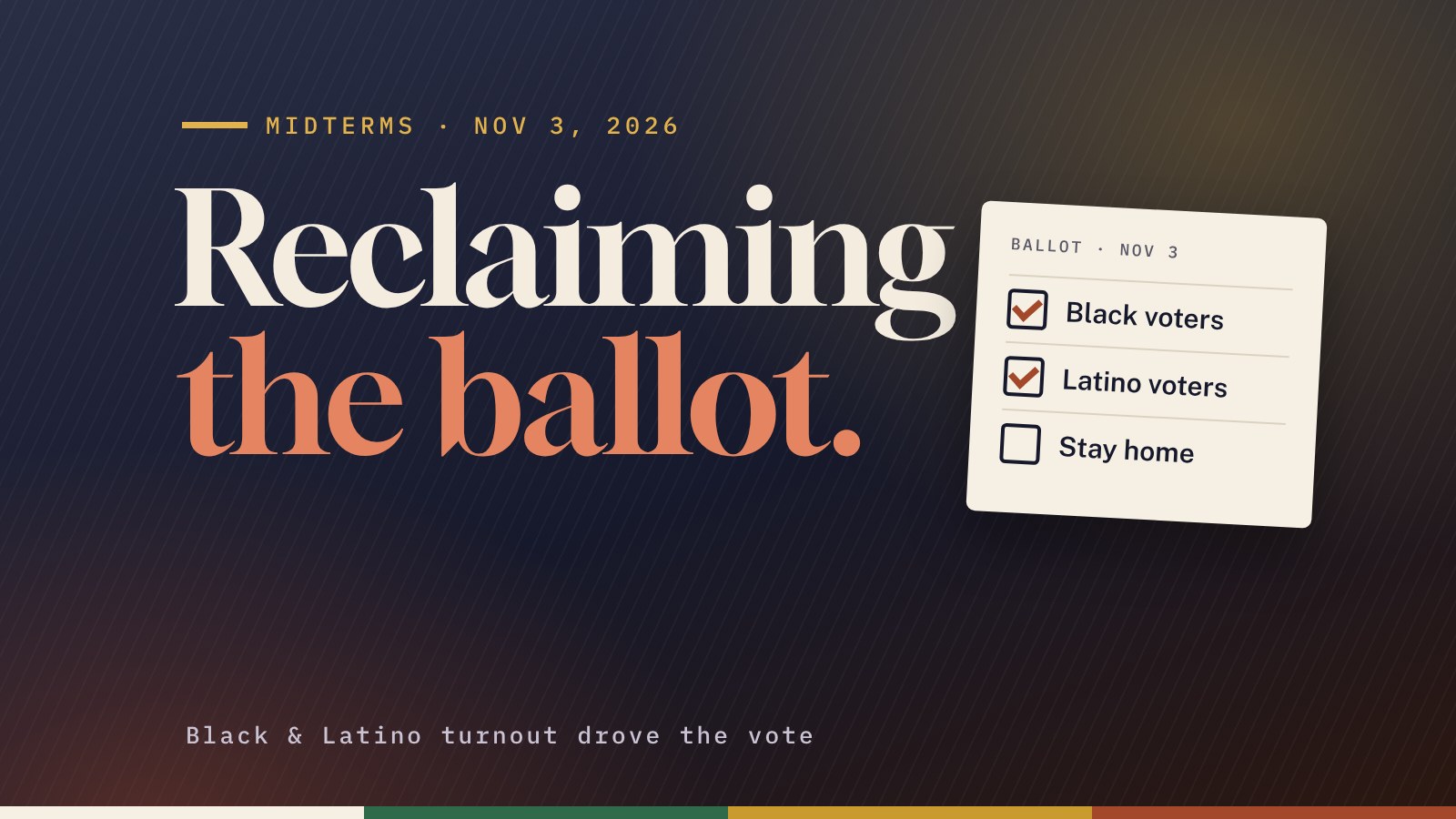
Tuesday’s midterm elections generated a sweeping transformation across the political landscape, powered directly by a surge in Black and Latino voter turnout. Communities of color aggressively pivoted back to the Democratic column, erasing margins from previous cycles and delivering decisive victories in critical state and federal races.
Data collected across national exit polling and state voter registries outlines exactly where the shift occurred, who won, and the policy foundations that assured these victories.
The Demographics of the Blueprint: Who Voted and Where
The nationwide “blue wave” was heavily anchored by targeted demographic shifts that rejected recent Republican gains. According to post-election analysis from The New York Times Voter Trends, multiple core demographics shifted dramatically toward Democrats compared to 2024, most notably young voters (ages 18 to 29), Black men, and Latino communities.
1. New York Gubernatorial Race: Hochul and Adams Make History
In New York, incumbent Governor Kathy Hochul won reelection with 60% of the vote, defeating Republican challenger Bruce Blakeman. This victory also secured a historic milestone, electing Adrienne Adams as the first Black woman lieutenant governor of New York.
- The Urban Turnout Engine: Turnout inside heavily minority neighborhoods fueled a major leftward swing. According to The New York Times Election Interactive, key counties with dense Black and Latino populations shifted profoundly: the Bronx shifted 21 points more Democratic compared to 2024, Queens 20 points, and Brooklyn 15 points.
- The Demographic Breakdown: Data from the NBC News Exit Polls highlights the demographic floor of this victory: Black women voted 97% to 3% in favor of the Hochul/Adams ticket, Latino women supported Democrats at 84%, and Latino men backed the ticket at 63%.
2. The Congressional and National Landscape
Nationally, the sudden collapse of Donald Trump’s support among Latino voters allowed Democrats to take control of both the House of Representatives and the Senate, alongside governorships in states like Georgia, Texas, and Nevada.
- The Congressional Rebound: A national midterm poll of 3,014 Latino voters conducted by the advocacy group UnidosUS reported that Democratic House candidates won 67% of the total Latino vote—a double-digit (11-point) surge over the 56% support recorded in 2024.
- Overcoming Gerrymandering: As noted in a post-election statement by the Legal Defense Fund (LDF), Black voter turnout was exceptionally pronounced in states that had gerrymandered their congressional maps following the Supreme Court’s Louisiana v. Callais decision. In Georgia, this surge directly propelled Keisha Lance Bottoms to a transformational victory as the first Black woman governor in U.S. history.
The Policy Catalyst: The Data Behind the Votes
The shift back to the Democratic column was not a generic party-line vote; it was a transactional response to a distinct, policy-driven message that resonated with local household anxieties.
- Affordability and Cost of Living: The UnidosUS Midterm Election Voter Poll showed that grocery and food costs were the absolute leading concerns for Latino voters, followed closely by housing, gasoline, and prescription healthcare costs. Democratic candidates who leaned heavily on pocketbook relief, capping essential costs, and targeting economic relief to urban working corridors successfully activated non-college-educated voters of color.
- Immigration Enforcement and Democracy: Exit data compiled by AS/COA Online showed deep frustration with the intensity of federal immigration enforcement and the condition of democratic norms. The UnidosUS data verified that 90% of Latino voters heavily support a balanced approach combining border safety with an earned path to citizenship for long-term residents. Candidates who championed legal paths to residency while firmly standing against aggressive enforcement saw localized turnout spikes.
The Takeaway
As the final numbers are tallied by local election boards, the lesson of the midterms remains clear. In the words of LDF President Janai Nelson, “Black and brown voters made a statement... anyone who underestimates their political power does so at their own peril.” By centering on inflation, cost-of-living relief, civil rights protections, and immigration equity, Democratic candidates successfully mobilized urban neighborhoods to secure a historic governance shift.
Dr. Richard Nuñez-Lawrence is the founding Executive Director of the Afro-Latino Association for Policy and Advocacy (ALAPA).
Las elecciones de mitad de período del martes provocaron una amplia transformación del panorama político, impulsada directamente por un aumento de la participación de votantes negros y latinos. Las comunidades de color regresaron con fuerza al bando demócrata, borrando los márgenes de ciclos anteriores y logrando victorias decisivas en contiendas estatales y federales clave.
Los datos de las encuestas a pie de urna nacionales y de los registros electorales estatales muestran con precisión dónde se produjo el cambio, quién ganó y qué bases de políticas públicas aseguraron estas victorias.
La demografía del plan: quién votó y dónde
La «ola azul» nacional se apoyó en gran medida en cambios demográficos concretos que rechazaron los avances republicanos recientes. Según el análisis poselectoral de The New York Times Voter Trends, varios grupos demográficos clave se inclinaron de forma marcada hacia los demócratas en comparación con 2024, sobre todo los votantes jóvenes (de 18 a 29 años), los hombres negros y las comunidades latinas.
1. La elección a gobernador de Nueva York: Hochul y Adams hacen historia
En Nueva York, la gobernadora Kathy Hochul fue reelegida con el 60 % de los votos, al derrotar al candidato republicano Bruce Blakeman. Esta victoria también marcó un hito histórico: la elección de Adrienne Adams como la primera mujer negra vicegobernadora de Nueva York.
- El motor de la participación urbana: La participación en barrios con mayoría de minorías impulsó un fuerte giro hacia la izquierda. Según The New York Times Election Interactive, los condados clave con gran población negra y latina cambiaron de forma profunda: el Bronx se volvió 21 puntos más demócrata que en 2024, Queens 20 puntos y Brooklyn 15 puntos.
- El desglose demográfico: Los datos de las encuestas a pie de urna de NBC News muestran la base de esta victoria: las mujeres negras votaron 97 % a 3 % por la fórmula Hochul/Adams, las mujeres latinas apoyaron a los demócratas con un 84 % y los hombres latinos respaldaron la fórmula con un 63 %.
2. El panorama del Congreso y nacional
A nivel nacional, el desplome repentino del apoyo a Donald Trump entre los votantes latinos permitió a los demócratas tomar el control tanto de la Cámara de Representantes como del Senado, además de gobernaciones en estados como Georgia, Texas y Nevada.
- La recuperación en el Congreso: Una encuesta nacional de 3.014 votantes latinos realizada por la organización UnidosUS indicó que los candidatos demócratas a la Cámara obtuvieron el 67 % del voto latino total, un aumento de dos dígitos (11 puntos) respecto al 56 % registrado en 2024.
- Superar la manipulación de distritos: Como señaló el Fondo de Defensa Legal (Legal Defense Fund, LDF) en un comunicado poselectoral, la participación negra fue especialmente alta en los estados que redibujaron sus mapas del Congreso tras la decisión de la Corte Suprema en el caso Louisiana v. Callais. En Georgia, este aumento impulsó directamente la victoria transformadora de Keisha Lance Bottoms como la primera mujer negra gobernadora en la historia de Estados Unidos.
El catalizador de políticas: los datos detrás de los votos
El regreso al bando demócrata no fue un voto partidista genérico; fue una respuesta concreta a un mensaje centrado en políticas públicas que conectó con las preocupaciones de los hogares.
- Asequibilidad y costo de vida: La encuesta electoral de mitad de período de UnidosUS mostró que el costo de los alimentos era la principal preocupación de los votantes latinos, seguido de cerca por la vivienda, la gasolina y el costo de los medicamentos. Los candidatos demócratas que apostaron por el alivio económico, el tope a los costos esenciales y la ayuda dirigida a los corredores urbanos de trabajadores lograron movilizar a votantes de color sin título universitario.
- Control migratorio y democracia: Los datos de encuestas a pie de urna recopilados por AS/COA Online mostraron una profunda frustración con la intensidad del control migratorio federal y el estado de las normas democráticas. Los datos de UnidosUS confirmaron que el 90 % de los votantes latinos apoya un enfoque equilibrado que combine la seguridad fronteriza con una vía a la ciudadanía para los residentes de larga data. Los candidatos que defendieron vías legales a la residencia y se opusieron firmemente al control agresivo vieron aumentos locales de participación.
La conclusión
Mientras las juntas electorales locales terminan el conteo, la lección de estas elecciones es clara. En palabras de la presidenta del LDF, Janai Nelson: «Los votantes negros y morenos hicieron una declaración... quien subestime su poder político lo hace bajo su propio riesgo». Al centrarse en la inflación, el alivio del costo de vida, la protección de los derechos civiles y la equidad migratoria, los candidatos demócratas lograron movilizar a los barrios urbanos y asegurar un cambio de gobierno histórico.
El Dr. Richard Nuñez-Lawrence es el director ejecutivo fundador de la Asociación Afrolatina de Política y Defensa (Afro-Latino Association for Policy and Advocacy, ALAPA).
ALAPA, the Afro-Latino Association for Policy & Advocacy, is a New York nonprofit for Afro-Latinos across the Americas and the Caribbean.ALAPA, la Afro-Latino Association for Policy & Advocacy, es una organización sin fines de lucro de Nueva York para la comunidad afrolatina de las Américas y el Caribe.