The Hidden Maternal Health Crisis: Why Afro-Latina and Non-English-Speaking Black Mothers Are Overlooked in New York CityLa crisis oculta de salud materna: por qué las madres afrolatinas y las madres negras que no hablan inglés pasan desapercibidas en Nueva York
Black mothers in New York City die of pregnancy-related causes at six times the rate of white mothers. Afro-Latina and African immigrant mothers face the same risk, but hospital data and health outreach rarely reach them.Las madres negras de Nueva York mueren por causas relacionadas con el embarazo seis veces más que las madres blancas. Las madres afrolatinas e inmigrantes africanas enfrentan el mismo riesgo, pero los datos hospitalarios y las campañas de salud rara vez las alcanzan.
 ByPor Dr. Richard Nuñez-Lawrence, Founding Executive Director, ALAPADirector ejecutivo fundador de ALAPA5 min readmin de lectura
Across New York City, Black women and birthing people face a devastating, well-documented maternal mortality crisis. Yet within that crisis lies an even less visible emergency affecting two rapidly growing groups: Afro-Latina mothers and non-English-speaking Black immigrant mothers from across the African diaspora—including West and Central Africa, Haiti, and the Spanish-speaking Caribbean and Latin America.
When hospital intake systems group all Spanish-speaking patients into a single “Hispanic” bucket without recording race, and when multilingual health outreach fails to address anti-Black bias in clinical care, thousands of Black mothers of African descent enter delivery rooms without knowing the heightened medical risks they face—or the life-saving protections available to them.
By the Numbers: A Stark Racial Divide Masked by Broad Data
Public health data from New York City and New York State reveals an alarming racial gap in maternal survival, while simultaneously showing how aggregated data hides the true toll on Afro-Latinas:
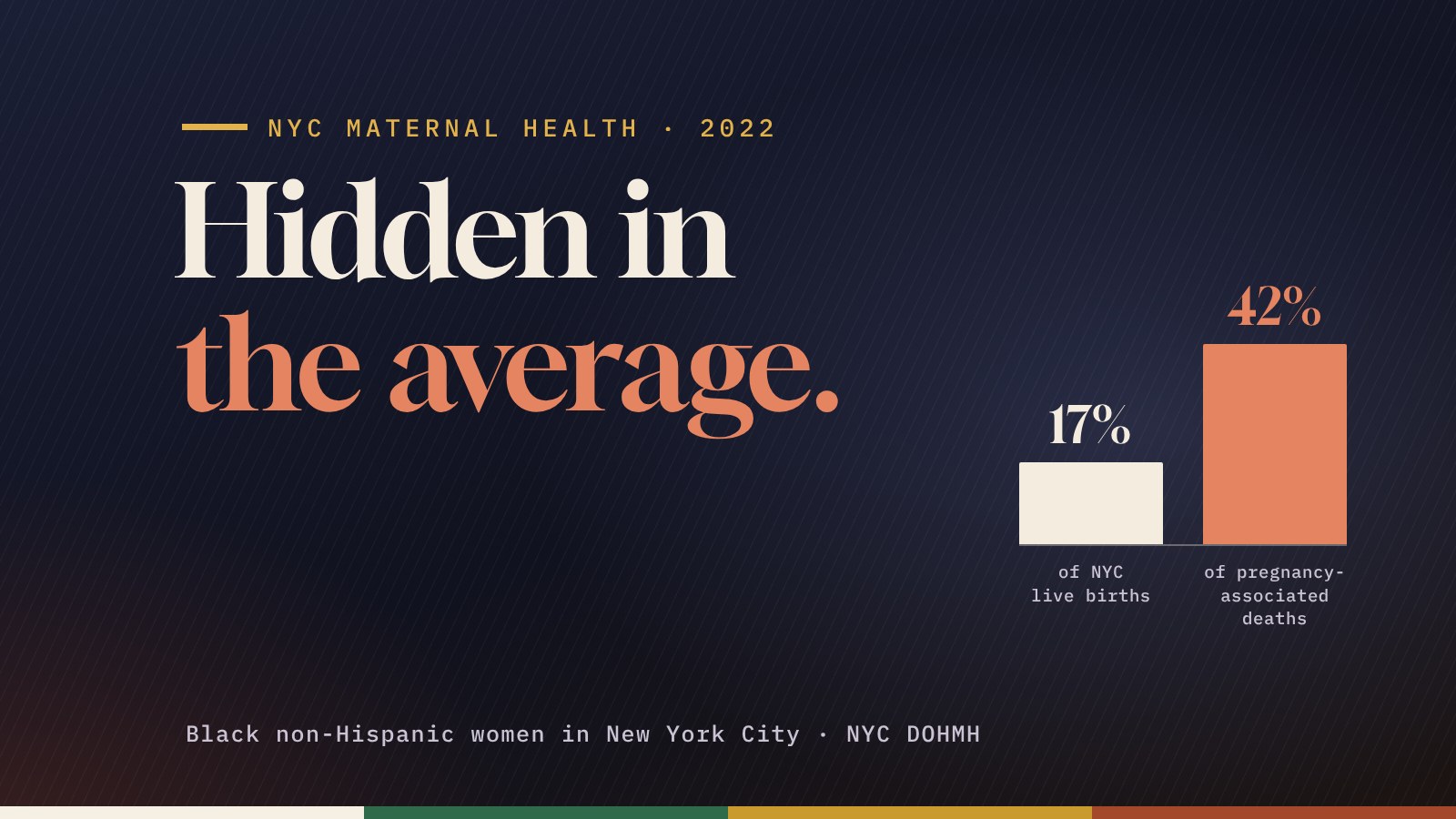
- Four to Six Times Higher Risk in NYC: According to surveillance data from the New York City Department of Health and Mental Hygiene (DOHMH), Black non-Hispanic women in New York City are four times more likely to die of a pregnancy-associated cause and six times more likely to die of a pregnancy-related cause compared to white non-Hispanic women. In the DOHMH’s Pregnancy-Associated Mortality in New York City report, Black non-Hispanic women accounted for 42.4% of all pregnancy-associated deaths in 2022 despite representing just 17.4% of live births—with the Bronx recording the highest five-year pregnancy-associated mortality ratio in the city at 84.9 deaths per 100,000 live births.
- Preventable Deaths Statewide: According to the New York State Department of Health (NYSDOH), the statewide pregnancy-related mortality ratio for Black non-Hispanic women reached 54.7 deaths per 100,000 live births, nearly five times the rate for white women (11.2), with 73.6% of pregnancy-related deaths deemed preventable.
- The “Hispanic Paradox” Illusion: Statewide data compiled by the New York Health Foundation lists the overall Hispanic maternal mortality rate at 12.6 deaths per 100,000 live births—lower than the white rate (15.1). Because hospital discharge records and vital statistics rarely disaggregate Hispanic patients by race, favorable averages among lighter-skinned or non-Black Hispanic patients completely mask the severe morbidity and mortality rates experienced by Afro-Latina mothers.
- Hemispheric Evidence of Afro-Descendant Risk: Where data is disaggregated, the disparity is unmistakable. A systematic review published in the Journal of Racial and Ethnic Health Disparities confirmed elevated rates of preterm birth and low birth weight among Afro-Latinas compared to their peers. Internationally, reports from the Pan American Health Organization (PAHO) and the United Nations Population Fund (UNFPA) show that Afro-descendant women across the Americas experience preventable cardiovascular pregnancy complications—such as preeclampsia, eclampsia, and postpartum cardiomyopathy—at rates up to five times higher than white women, with maternal mortality 3 times higher in Ecuador and 1.8 times higher in Colombia.
The Information and Language Gap Across the African Diaspora
For many immigrant mothers arriving in New York City from West Africa (such as Senegal, Guinea, Mali, and Nigeria) or from Latin America and the Caribbean, navigating the U.S. maternity system carries a dangerous blind spot: many do not know that anti-Blackness in American healthcare puts their lives at disproportionate risk.
- Disconnect from Diaspora Health Warnings: Many Latina mothers of African descent identify primarily through nationality or Spanish language rather than through the U.S. racial framework of Blackness. As a result, public health campaigns warning about “Black maternal mortality” often fail to register with Afro-Latina patients—even though clinicians perceive and treat dark-skinned Latinas through the exact same anti-Black biases that lead providers to dismiss pain, delay emergency interventions, and overlook postpartum warning signs.
- Silence in Growing African Immigrant Communities: Similarly, New York City’s growing African immigrant communities frequently arrive from countries where provider-patient dynamics differ sharply from U.S. hospital systems. Without culturally tailored prenatal education explaining how to advocate against medical dismissal, non-English-speaking mothers from Francophone, Wolof, Fulani, or Arabic-speaking households are left vulnerable when complications arise.
- Language Access Failures in Delivery Rooms: Research published in PMC / National Library of Medicine demonstrates that Black and Latina mothers disproportionately deliver in under-resourced safety-net hospitals where language interpretation services are often delayed, automated via tablet screens during active labor, or unavailable in Indigenous and West African languages—making informed consent and symptom reporting nearly impossible.
What Is Being Done Right Now—and What Must Happen Next
State and municipal leaders in New York have launched major policy initiatives aimed at closing the maternal mortality gap, yet advocates warn that targeted outreach is essential so Afro-Latina and African immigrant families actually receive these benefits:
- Free Medicaid Doula Care for 12 Months Postpartum: As detailed by the New York State Department of Health and The Century Foundation, New York State Medicaid covers doula services at no cost during pregnancy, labor, and up to 12 months postpartum (including up to eight perinatal visits plus birth support), backed by a statewide standing order eliminating the need for a physician’s referral. Culturally matched, multilingual doulas serve as vital patient advocates in the delivery room, bridging language barriers and pushing back against clinical bias.
- Extended Postpartum Coverage and Paid Prenatal Leave: New York has expanded postpartum Medicaid eligibility to a full year after birth and implemented paid prenatal leave and eliminated co-pays for prenatal visits—policies highlighted by The New York Times and the Community Service Society of New York (CSSNY).
- Community-Based Birth Equity Programs: Local organizations such as Mama Glow, NYC Health + Hospitals’ maternal home visiting initiatives, and Bronx-based community health networks are expanding multilingual prenatal education and culturally concordant midwifery care.
However, as a June 2026 audit reported by The City Reporter noted, statewide reforms have still not closed the Black-white maternal mortality gap. To protect Afro-Latina and diaspora mothers, organizations like the Afro-Latino Association for Policy & Advocacy (ALAPA) are calling for three urgent steps:
- Mandatory Hospital Race and Ethnicity Disaggregation: Require all New York hospitals and the DOHMH to record self-identified race alongside Hispanic ethnicity and primary language on every prenatal, delivery, and mortality record so Afro-Latina maternal outcomes are no longer hidden inside general Latino averages.
- Multilingual Diaspora Outreach for Medicaid Doulas: Fund community health workers and African and Afro-Latino community organizations to educate Spanish-, French-, Haitian Creole-, and West African-language-speaking mothers about their right to a free Medicaid doula and culturally sensitive care.
- Language-Concordant Clinical Staffing and Bias Audits: Require safety-net maternity wards serving high concentrations of Black and Latino families to maintain 24/7 live medical interpreters and publish hospital-level maternal morbidity dashboards broken down by both race and ethnicity.
Dr. Richard Nuñez-Lawrence is the founding Executive Director of the Afro-Latino Association for Policy and Advocacy (ALAPA).
En toda la ciudad de Nueva York, las mujeres y personas gestantes negras enfrentan una crisis de mortalidad materna devastadora y bien documentada. Sin embargo, dentro de esa crisis hay una emergencia aún menos visible que afecta a dos grupos en rápido crecimiento: las madres afrolatinas y las madres inmigrantes negras que no hablan inglés, procedentes de toda la diáspora africana, incluidas África Occidental y Central, Haití y el Caribe y América Latina hispanohablantes.
Cuando los sistemas de admisión de los hospitales agrupan a todas las pacientes hispanohablantes en una sola categoría de «hispanas» sin registrar la raza, y cuando las campañas de salud multilingües no abordan el sesgo antinegro en la atención clínica, miles de madres negras de ascendencia africana llegan a la sala de partos sin conocer los mayores riesgos médicos que enfrentan ni las protecciones que pueden salvarles la vida.
Las cifras: una brecha racial profunda oculta tras datos generales
Los datos de salud pública de la ciudad y el estado de Nueva York revelan una brecha racial alarmante en la supervivencia materna y, al mismo tiempo, muestran cómo los datos agregados ocultan el verdadero costo para las mujeres afrolatinas:
- Entre cuatro y seis veces más riesgo en Nueva York: Según los datos de vigilancia del Departamento de Salud e Higiene Mental de la Ciudad de Nueva York (DOHMH), las mujeres negras no hispanas de la ciudad tienen cuatro veces más probabilidades de morir por una causa asociada al embarazo y seis veces más probabilidades de morir por una causa relacionada con el embarazo que las mujeres blancas no hispanas. En el informe del DOHMH sobre mortalidad asociada al embarazo en Nueva York, las mujeres negras no hispanas representaron el 42,4 % de todas las muertes asociadas al embarazo en 2022, aunque solo correspondían al 17,4 % de los nacimientos, y el Bronx registró la razón de mortalidad asociada al embarazo a cinco años más alta de la ciudad: 84,9 muertes por cada 100.000 nacidos vivos.
- Muertes evitables en todo el estado: Según el Departamento de Salud del Estado de Nueva York (NYSDOH), la razón de mortalidad relacionada con el embarazo de las mujeres negras no hispanas en el estado llegó a 54,7 muertes por cada 100.000 nacidos vivos, casi cinco veces la de las mujeres blancas (11,2), y el 73,6 % de las muertes relacionadas con el embarazo se consideraron evitables.
- La ilusión de la «paradoja hispana»: Los datos estatales recopilados por la New York Health Foundation sitúan la tasa general de mortalidad materna hispana en 12,6 muertes por cada 100.000 nacidos vivos, por debajo de la de las mujeres blancas (15,1). Como los registros de alta hospitalaria y las estadísticas vitales rara vez desagregan a las pacientes hispanas por raza, los promedios favorables de las pacientes hispanas de piel más clara o no negras ocultan por completo las graves tasas de morbilidad y mortalidad que sufren las madres afrolatinas.
- Evidencia del riesgo afrodescendiente en todo el hemisferio: Donde los datos sí se desagregan, la disparidad es inconfundible. Una revisión sistemática publicada en el Journal of Racial and Ethnic Health Disparities confirmó tasas más altas de parto prematuro y bajo peso al nacer entre las mujeres afrolatinas en comparación con sus pares. A nivel internacional, informes de la Organización Panamericana de la Salud (OPS) y del Fondo de Población de las Naciones Unidas (UNFPA) muestran que las mujeres afrodescendientes de las Américas sufren complicaciones cardiovasculares evitables durante el embarazo —como preeclampsia, eclampsia y miocardiopatía posparto— con tasas hasta cinco veces mayores que las mujeres blancas, y una mortalidad materna tres veces mayor en Ecuador y 1,8 veces mayor en Colombia.
La brecha de información e idioma en la diáspora africana
Para muchas madres inmigrantes que llegan a Nueva York desde África Occidental (por ejemplo, Senegal, Guinea, Malí y Nigeria) o desde América Latina y el Caribe, el sistema de maternidad de Estados Unidos encierra un punto ciego peligroso: muchas no saben que el racismo antinegro en la atención médica estadounidense pone su vida en un riesgo desproporcionado.
- Desconexión de las advertencias de salud para la diáspora: Muchas madres latinas de ascendencia africana se identifican sobre todo por su nacionalidad o por el idioma español, no por el marco racial estadounidense de la negritud. Por eso, las campañas de salud pública que alertan sobre la «mortalidad materna negra» a menudo no llegan a las pacientes afrolatinas, aunque el personal médico percibe y trata a las latinas de piel oscura con los mismos sesgos antinegros que llevan a restar importancia al dolor, retrasar intervenciones de emergencia y pasar por alto señales de alarma después del parto.
- Silencio en las crecientes comunidades de inmigrantes africanos: Del mismo modo, muchas familias de las crecientes comunidades de inmigrantes africanos de Nueva York llegan de países donde la relación entre médicos y pacientes es muy distinta a la de los hospitales estadounidenses. Sin una educación prenatal adaptada a su cultura que explique cómo defenderse cuando no se les toma en serio, las madres que no hablan inglés y provienen de hogares francófonos, wolof, fulani o arabófonos quedan desprotegidas cuando surgen complicaciones.
- Fallas de acceso lingüístico en la sala de partos: Investigaciones publicadas en PMC / Biblioteca Nacional de Medicina demuestran que las madres negras y latinas dan a luz de forma desproporcionada en hospitales públicos con pocos recursos, donde los servicios de interpretación suelen llegar tarde, se ofrecen de forma automatizada a través de tabletas durante el trabajo de parto o no existen para lenguas indígenas y de África Occidental, lo que hace casi imposible el consentimiento informado y la comunicación de síntomas.
Lo que se está haciendo ahora y lo que debe venir después
Los líderes estatales y municipales de Nueva York han puesto en marcha importantes iniciativas para cerrar la brecha de mortalidad materna, pero los defensores advierten que se necesita un alcance dirigido para que las familias afrolatinas e inmigrantes africanas realmente reciban estos beneficios:
- Doulas gratuitas por Medicaid hasta 12 meses después del parto: Como detallan el Departamento de Salud del Estado de Nueva York y The Century Foundation, Medicaid del estado de Nueva York cubre sin costo los servicios de doula durante el embarazo, el parto y hasta 12 meses después del parto (incluidas hasta ocho visitas perinatales además del acompañamiento en el parto), respaldado por una orden permanente estatal que elimina la necesidad de una remisión médica. Las doulas multilingües y afines a la cultura de la paciente son defensoras vitales en la sala de partos: tienden puentes ante las barreras de idioma y frenan el sesgo clínico.
- Cobertura posparto ampliada y licencia prenatal pagada: Nueva York amplió la cobertura de Medicaid posparto a un año completo después del nacimiento, implementó la licencia prenatal pagada y eliminó los copagos de las consultas prenatales, políticas destacadas por The New York Times y la Community Service Society of New York (CSSNY).
- Programas comunitarios de equidad en el parto: Organizaciones locales como Mama Glow, las iniciativas de visitas domiciliarias maternas de NYC Health + Hospitals y las redes de salud comunitaria del Bronx están ampliando la educación prenatal multilingüe y la atención de partería culturalmente afín.
Sin embargo, como señaló una auditoría de junio de 2026 publicada por The City Reporter, las reformas estatales todavía no han cerrado la brecha de mortalidad materna entre mujeres negras y blancas. Para proteger a las madres afrolatinas y de la diáspora, organizaciones como la Asociación Afrolatina de Política y Defensa (ALAPA) piden tres medidas urgentes:
- Desagregación obligatoria de raza y etnia en los hospitales: Exigir que todos los hospitales de Nueva York y el DOHMH registren la raza autoidentificada junto con la etnia hispana y el idioma principal en cada expediente prenatal, de parto y de defunción, para que los resultados maternos de las mujeres afrolatinas dejen de quedar ocultos en los promedios latinos generales.
- Alcance multilingüe a la diáspora sobre las doulas de Medicaid: Financiar a trabajadores comunitarios de salud y a organizaciones comunitarias africanas y afrolatinas para informar a las madres que hablan español, francés, criollo haitiano y lenguas de África Occidental sobre su derecho a una doula gratuita por Medicaid y a una atención culturalmente sensible.
- Personal clínico en el idioma de las pacientes y auditorías de sesgo: Exigir que las salas de maternidad de los hospitales públicos que atienden a muchas familias negras y latinas cuenten con intérpretes médicos en persona las 24 horas y publiquen paneles de morbilidad materna por hospital desglosados por raza y por etnia.
El Dr. Richard Nuñez-Lawrence es el director ejecutivo fundador de la Asociación Afrolatina de Política y Defensa (Afro-Latino Association for Policy and Advocacy, ALAPA).
ALAPA, the Afro-Latino Association for Policy & Advocacy, is a New York nonprofit for Afro-Latinos across the Americas and the Caribbean.ALAPA, la Afro-Latino Association for Policy & Advocacy, es una organización sin fines de lucro de Nueva York para la comunidad afrolatina de las Américas y el Caribe.